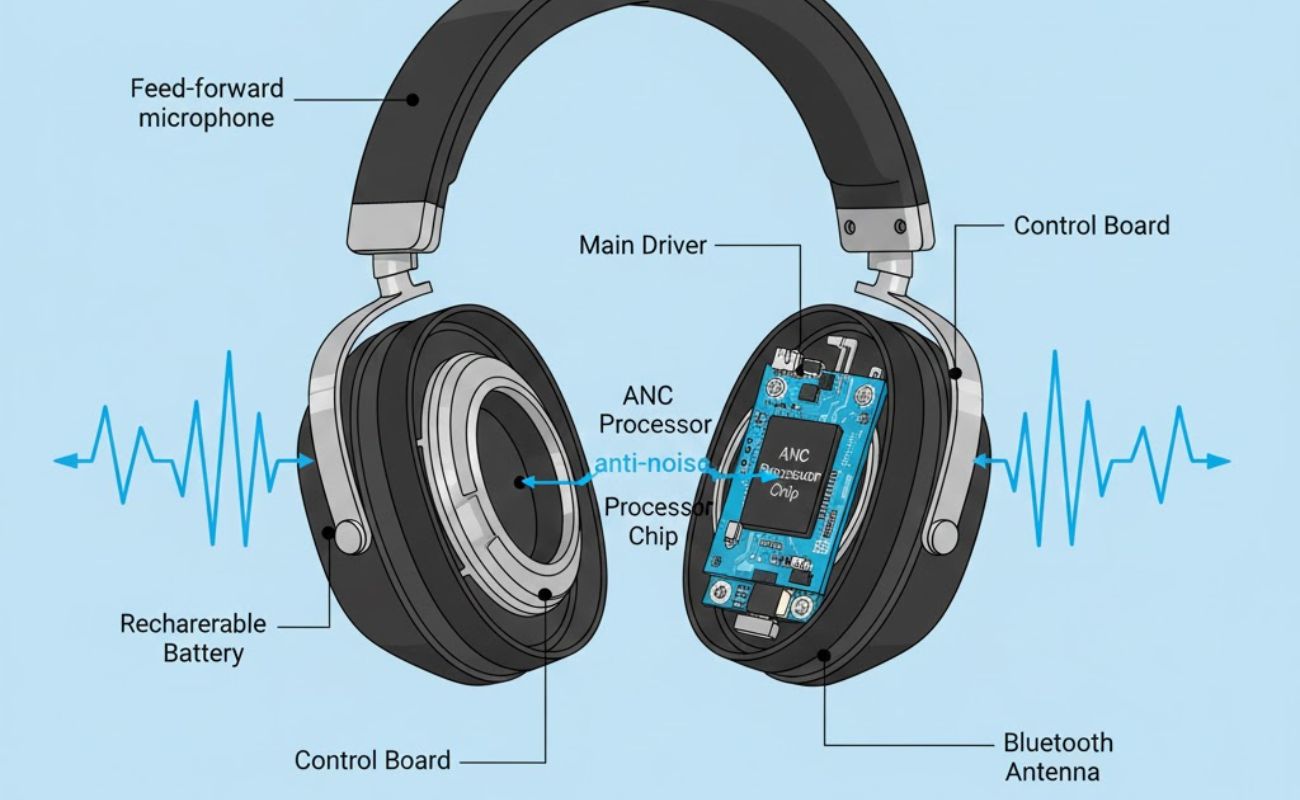
How do noise cancelling headphones work?
At their core, noise cancelling headphones reduce unwanted background sound by using advanced audio technology that counteracts external noise before it reaches your ears.
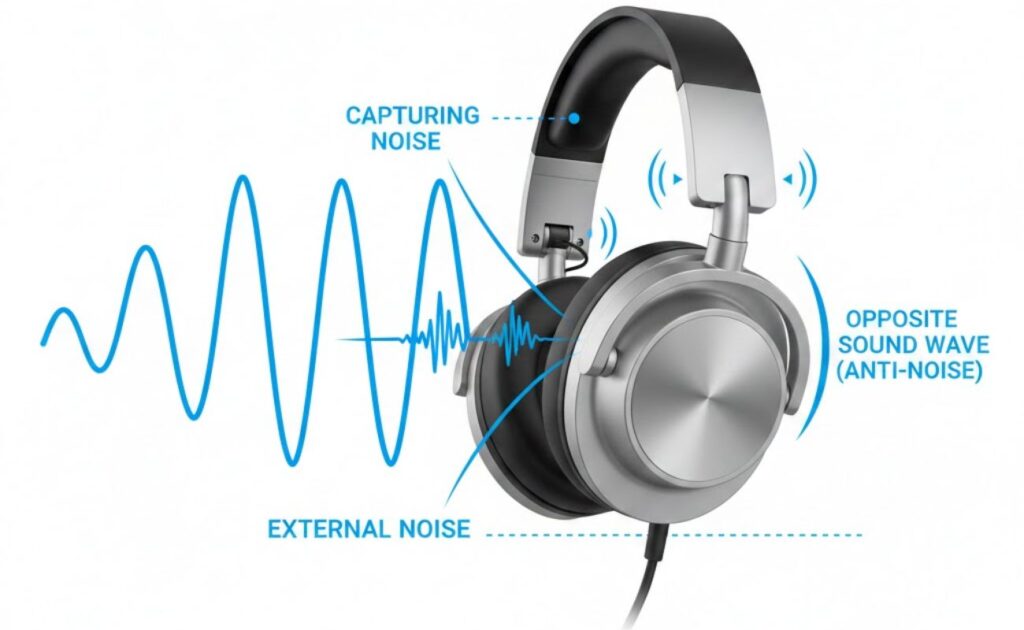
They don’t just block sound physically. Instead, they listen to the noise around you, analyze it in real time, and then produce an opposite sound wave that cancels it out. This process is called Active Noise Cancellation (ANC).
For everyday users, this means:
- Less engine noise on planes ✈️
- Reduced chatter in offices 🏢
- Better focus while studying 📚
- Clearer music and calls 🎧
This is why many people now consider noise cancelling headphones a daily necessity, not an extravagance.
Why do people need noise cancelling headphones today?
Modern life is noisy. Traffic, construction, coworkers, neighbors, and constant digital disturbances create mental weariness.
Common consumer pain points:
- Can’t focus while working from home
- Loud neighbors or roommates
- Background noise during Zoom or phone calls
- Travel weariness from flights and trains
- The music volume is too high just to block the sound
Noise cancelling headphones solve these problems by reducing environmental noise, allowing you to:
- Listen at lower, safer volumes
- Improve productivity and concentration
- Enjoy better call clarity
- Reduce stress and listening weariness
This is why demand for the best wireless noise cancelling headphones continues to rise globally.
What is the difference between active and passive noise cancellation?
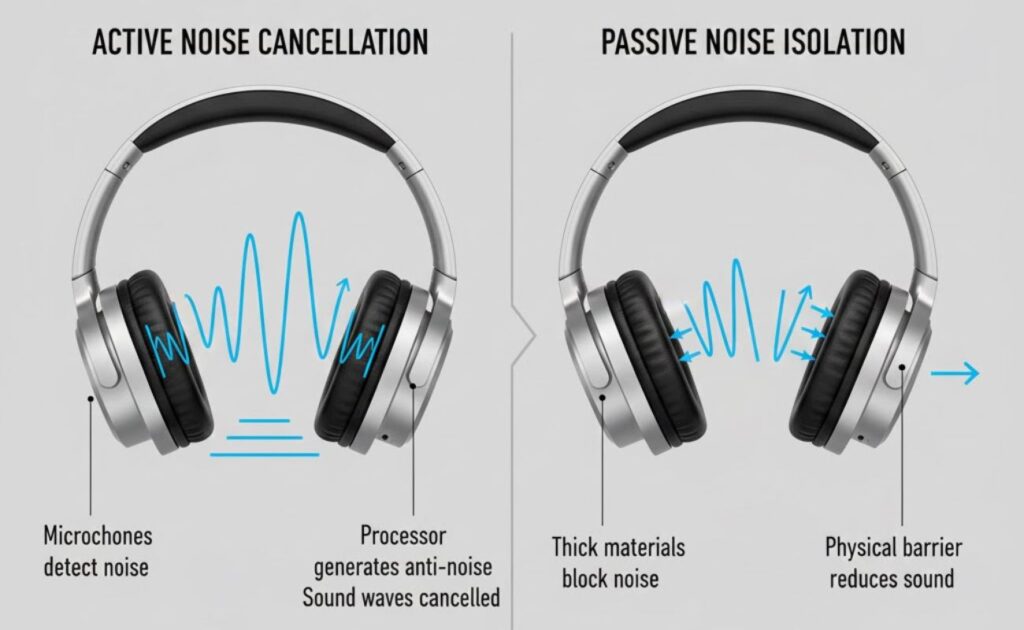
To fully understand how do noise cancelling headphones work, you must know the difference between active and passive noise cancellation.
Passive Noise Cancellation
- Uses physical materials (ear cups, ear pads)
- Blocks sound like earplugs
- Works best for high-frequency sounds (voices)
Active Noise Cancellation (ANC)
- Uses microphones and sound processing
- Cancels low-frequency sounds (engine hum, AC noise)
- Requires battery power
The best noise cancelling over ear headphones combine both methods for maximum efficiency.
How does active noise cancellation (ANC) technology actually work?
Active noise cancellation works in four main steps:
- Microphones detect external noise
- The system analyzes sound waves
- It generates an opposite (anti-noise) wave
- Both waves cancel each other out
This happens in milliseconds, so you don’t notice any delay.
Advanced ANC systems found in the best wireless noise cancelling headphones use:
- Multiple microphones
- AI-based noise exploration
- Adaptive sound profiles
This allows headphones to adjust automatically, whether you’re in a café, airplane, or quiet room.
How do microphones help noise cancelling headphones block sound?
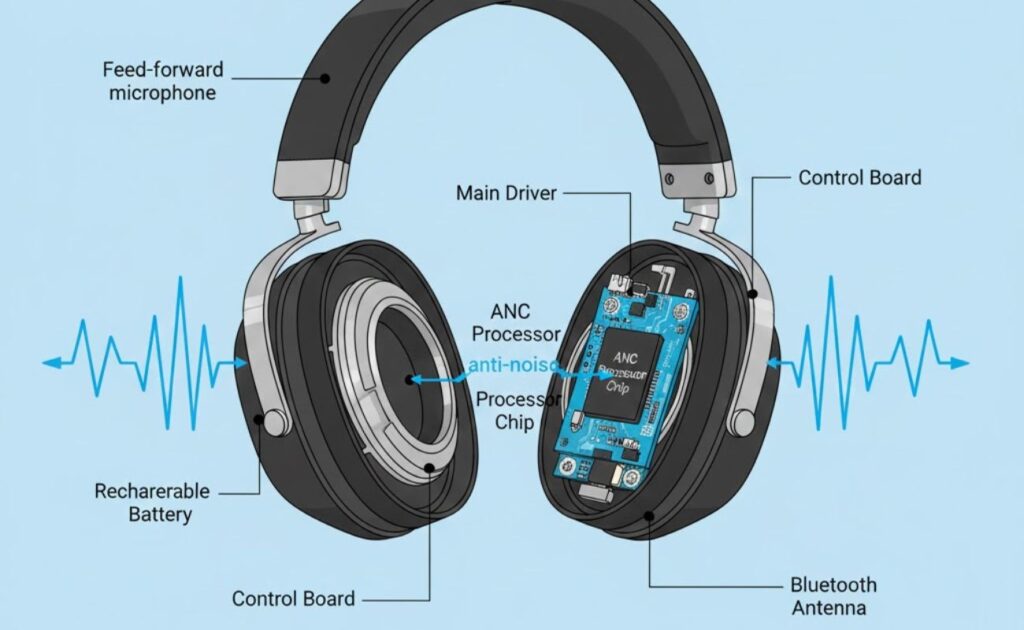
Microphones are the heart of ANC technology.
Types of microphones used:
- Feedforward microphones (outside the ear cup)
- Feedback microphones (inside the ear cup)
- Hybrid systems (both combined)
Hybrid systems are most common in best noise cancelling over ear headphones because they:
- Detect more noise types
- Adapt better to changing environments
- Deliver stronger noise reduction
Why are over-ear headphones better for noise cancellation?
Over-ear headphones surround your entire ear, creating a sealed acoustic chamber.
Advantages:
- Stronger passive separation
- Better bass response
- More space for ANC hardware
- Less sound escape
This is why frequent travelers and professionals often choose best noise cancelling over ear headphones instead of earbuds.
How do noise cancelling headphones work differ from wired ones?
Wireless models use Bluetooth technology combined with digital signal processing.
Benefits of wireless ANC headphones:
- No cables
- Multi-device pairing
- Touch controls and apps
- Portability and comfort
Modern Bluetooth codecs ensure minimal quality loss, making the best wireless noise cancelling headphones nearly equal to wired models in sound quality.
What problems do users face with noise cancelling headphones?
Despite their benefits, users still face challenges:
Common complaints:
- Pressure sensation in the earholes
- Reduced battery life with ANC on
- Wind noise outdoors
- Higher price for premium models
Understanding how do noise cancelling headphones work helps buyers choose the right model and avoid disappointment.
How do noise cancelling headphones work for the best noise cancelling over ear headphones?
When shopping, look for:
- Strong ANC performance
- Comfortable ear pads
- Long battery life (30+ hours)
- Clear call quality
- Reliable brand support
The best noise cancelling over ear headphones balance performance, comfort, and durability.
What should you look for in the best wireless noise cancelling headphones?
Key features to prioritize:
- Bluetooth 5.2 or higher
- Multipoint connectivity
- Transparency / ambient mode
- Fast charging
- Companion app support
These features separate average models from the best wireless noise cancelling headphones available today.
How do noise cancelling headphones work for sound quality change with noise cancellation on?
ANC can slightly affect sound signature:
- Bass often feels stronger
- Highs may soften slightly
Premium headphones automatically adjust EQ, ensuring music stays clear even with noise cancellation active.
Are noise cancelling headphones safe for long-term use?
Yes. In fact, they are safer than regular headphones because:
- You listen at lower volumes
- Less ear fatigue
- Reduced hearing damage risk
Medical experts generally agree ANC headphones are safe when used responsibly.
How do noise cancelling headphones work in real-world situations?
Performance by scenario:
- Airplanes: Excellent
- Offices: Very good
- Cafés: Good
- Windy outdoors: Moderate
Understanding real-world performance helps buyers set realistic expectations.
Who should buy noise cancelling headphones and who should not?
Best for:
- Travelers
- Remote workers
- Students
- Call-center professionals
Not ideal for:
- Situational awareness jobs
- Budget buyers who don’t need ANC
How can you get the best value when buying noise cancelling headphones?
Tips:
- Buy during sales
- Read verified user reviews
- Compare ANC strength, not just brand name
- Choose comfort over flashy features
Affiliate buyers often get the best deals by comparing best wireless noise cancelling headphones across multiple retailers.
Final Thoughts
Understanding how do noise cancelling headphones work empowers you to choose the right product for your lifestyle. Whether you want the best noise cancelling over ear headphones for travel or the best wireless noise cancelling headphones for work, the right choice can dramatically improve your daily comfort, focus, and audio experience.
How do noise cancelling headphones work on airplanes?
They cancel constant low-frequency engine noise using ANC.
Do noise cancelling headphones block all sound?
No, they reduce noise but don’t create total silence.
Are noise cancelling headphones good for studying?
Yes, they improve focus by reducing distractions.
Do wireless noise cancelling headphones need the internet?
No, only Bluetooth.
Can noise cancelling headphones damage hearing?
No, they help protect hearing by lowering volume needs.
Why do my ears feel pressure with the ANC?
It’s caused by sound wave cancellation, not air pressure.
Are over-ear headphones better than earbuds for ANC?
Yes, especially for deep noise reduction.
Does ANC work without music playing?
Yes, noise cancellation works independently.
How long do ANC headphones last?
High-quality models last 3–5 years with proper care.
Are expensive noise cancelling headphones worth it?
Usually yes, due to better comfort, ANC, and durability.